
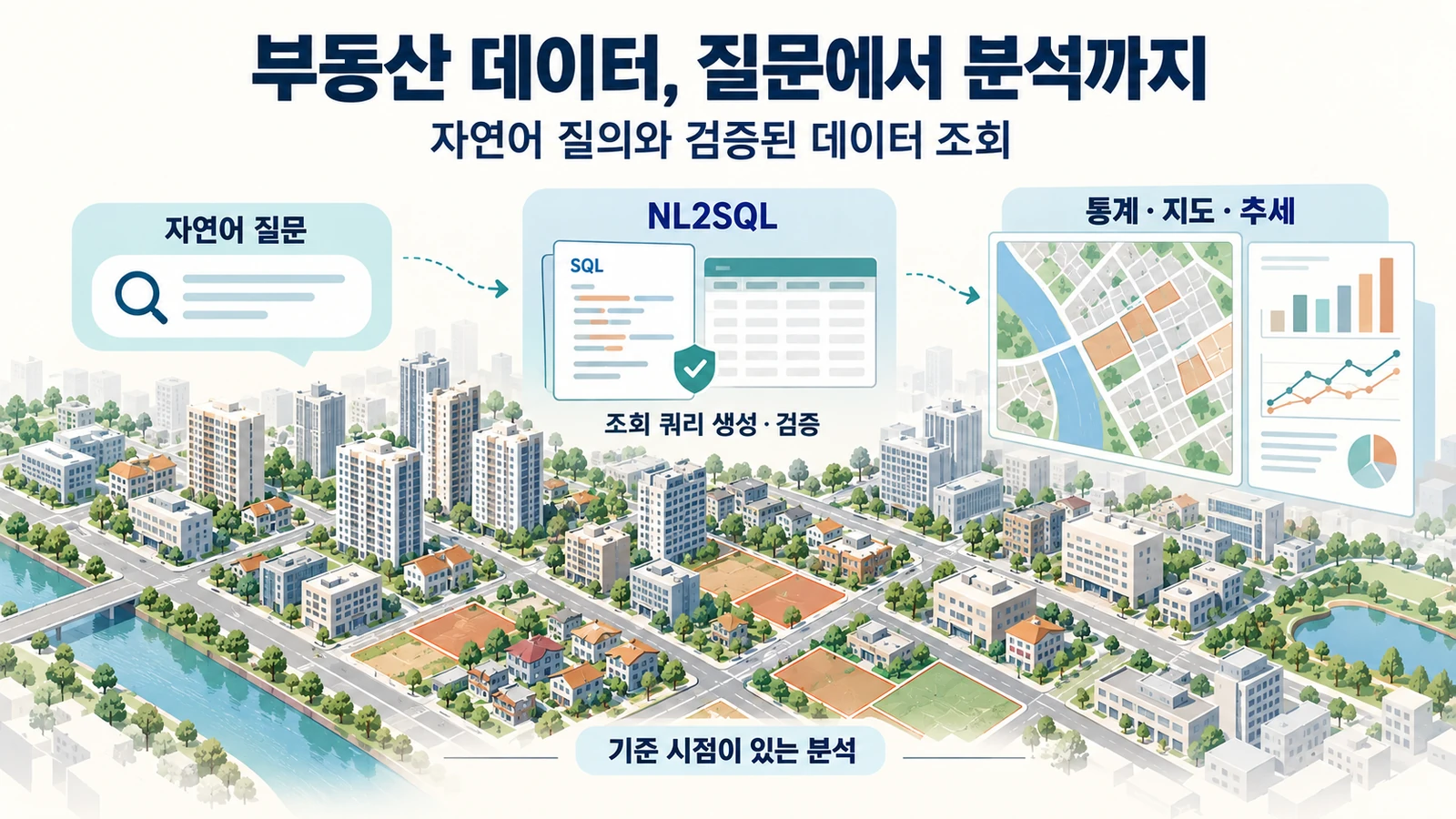
Natural language query and analysis of real estate data is a method of explaining statistics and trends by linking user questions to database inquiries. NL2SQL is an approach that converts natural language into SQL, and requires verification of the conversion results and confirmation of the data reference point.
What questions and data do you address?
Period, region, area, and indicators are defined from data that is permitted to be used, such as transactions, land, permits, and population. As a starting point, use a question that specifies conditions, such as “Please compare the change in trading volume and average trading price by period.” This question is intended to explain the application structure.
Flow of inquiry and analysis
| step | What to check |
|---|---|
| Question Interpretation | Check target area, period, indicator/unit and comparison conditions |
| Create/verify inquiry | Review queries across approved schemas and read-only scopes |
| data aggregation | Check and tally omissions, duplications and definition differences |
| Results Description | Displays tables, maps, trends, data reference points, and conditions used. |
How do you ensure the reliability of your analysis?
The results are compared with the correct query for each representative question, and ambiguous conditions are designed to be re-queried. It limits unauthorized table access and change queries, and allows you to review search conditions, sources, and execution history.
Response speed and accuracy will vary depending on data size, question type, system environment, and evaluation method. When performance is presented, the relevant conditions and evaluation materials are provided together.
How are the roles of GLT and partners divided?
| area | Role in collaboration |
|---|---|
| GLT Korea | Definition of schema and indicators of real estate and administrative data, complex question test cases, review of business rules and result consistency |
| AI technology partners | Design and implementation of AI model, agent, and platform, and model evaluation and operation technology |
| Customer company/operating organization | Data use rights, business review, application approval and operating policy |
The table above divides the areas of collaboration, and the actual scope of performance and output for each project is confirmed according to the contract and division of work.
Disclosure and scope of explanation
Introduction to Serendex Public ProjectIntroduces examples of querying and analyzing real estate trends based on NL2SQL in metropolitan local governments.
This article explains the application structure based on the published examples and the domain perspective of GLT. Each customer's contract period, inspection results, and quantitative performance are provided separately from the technical description on this page.