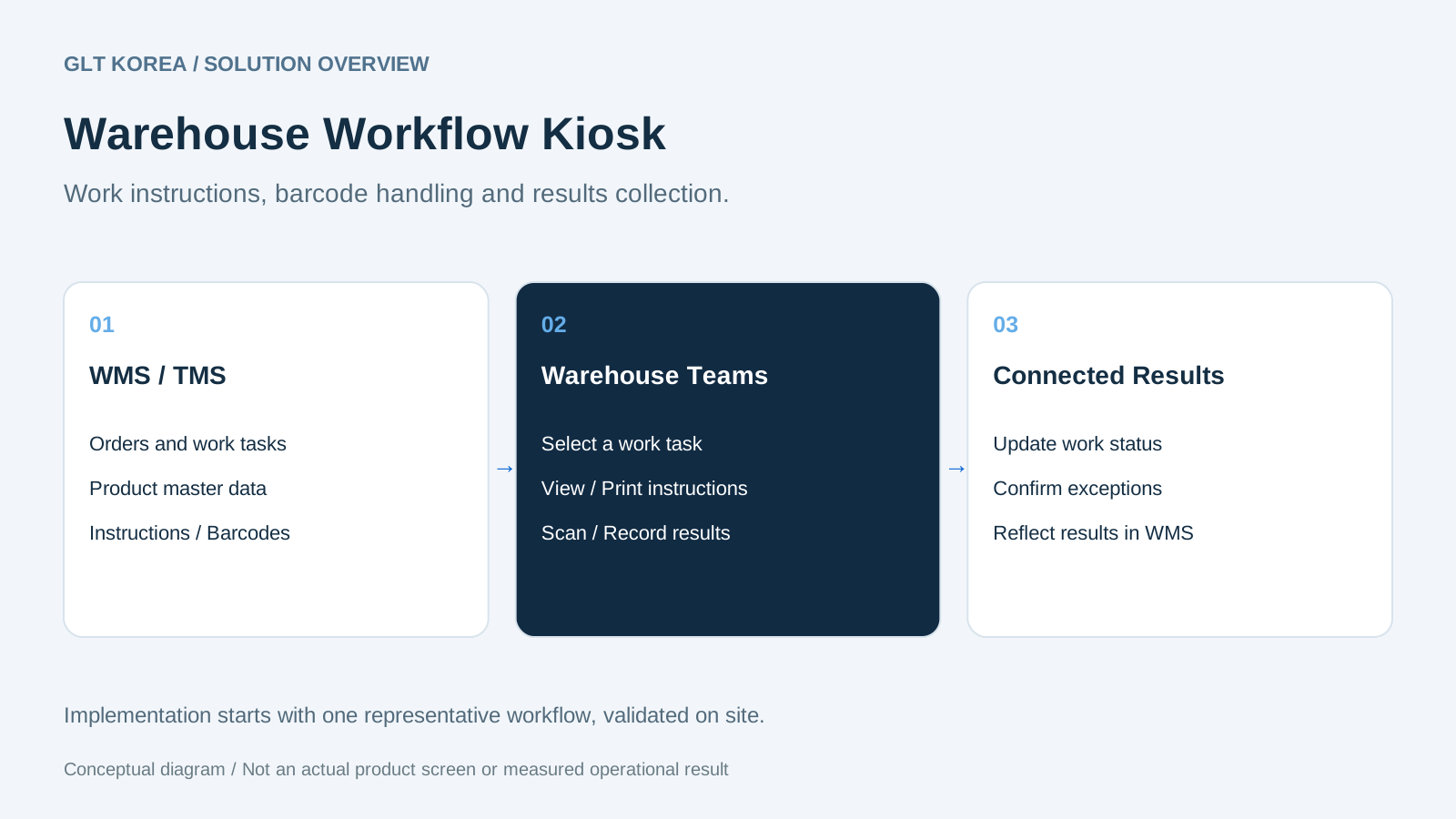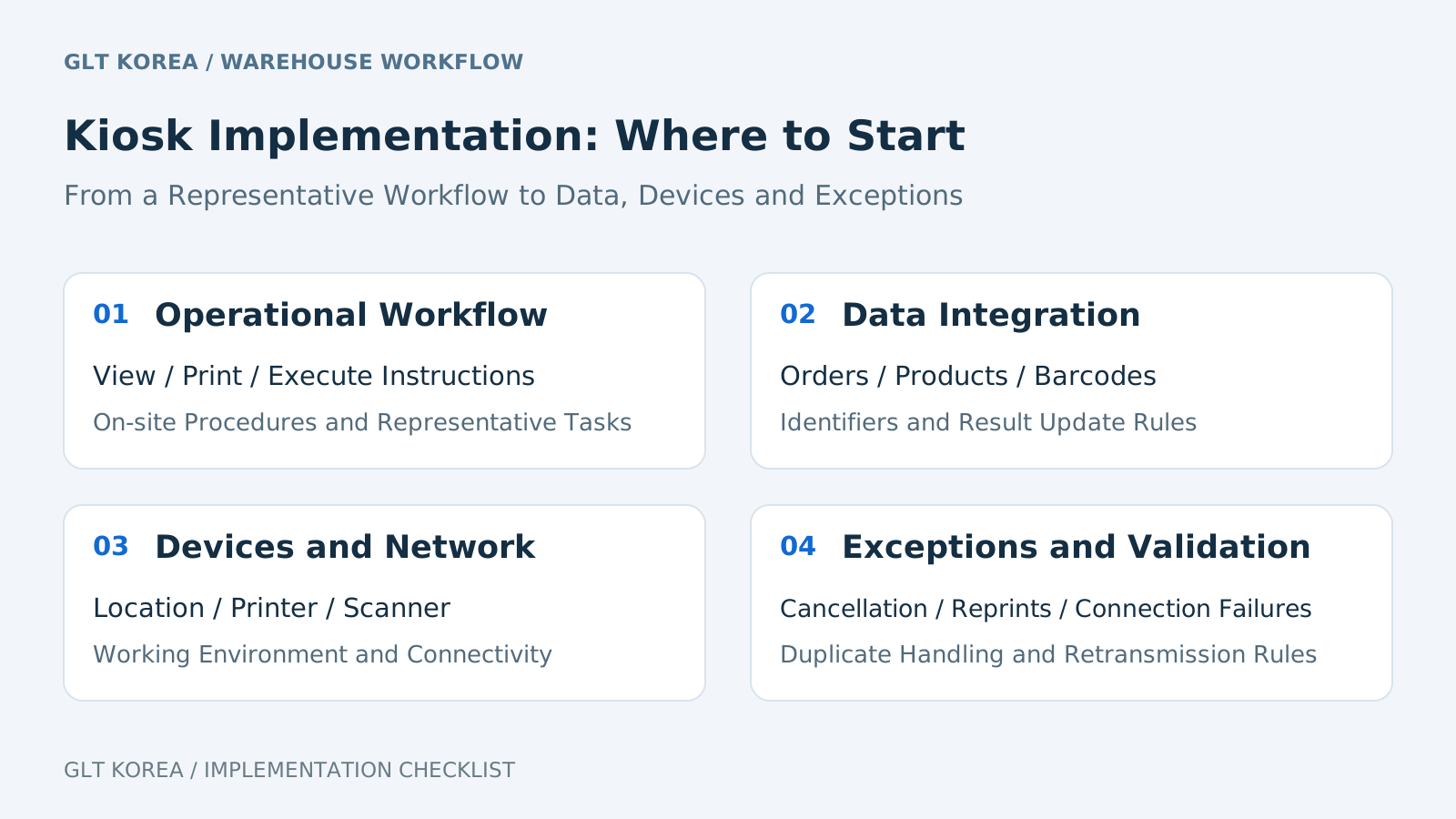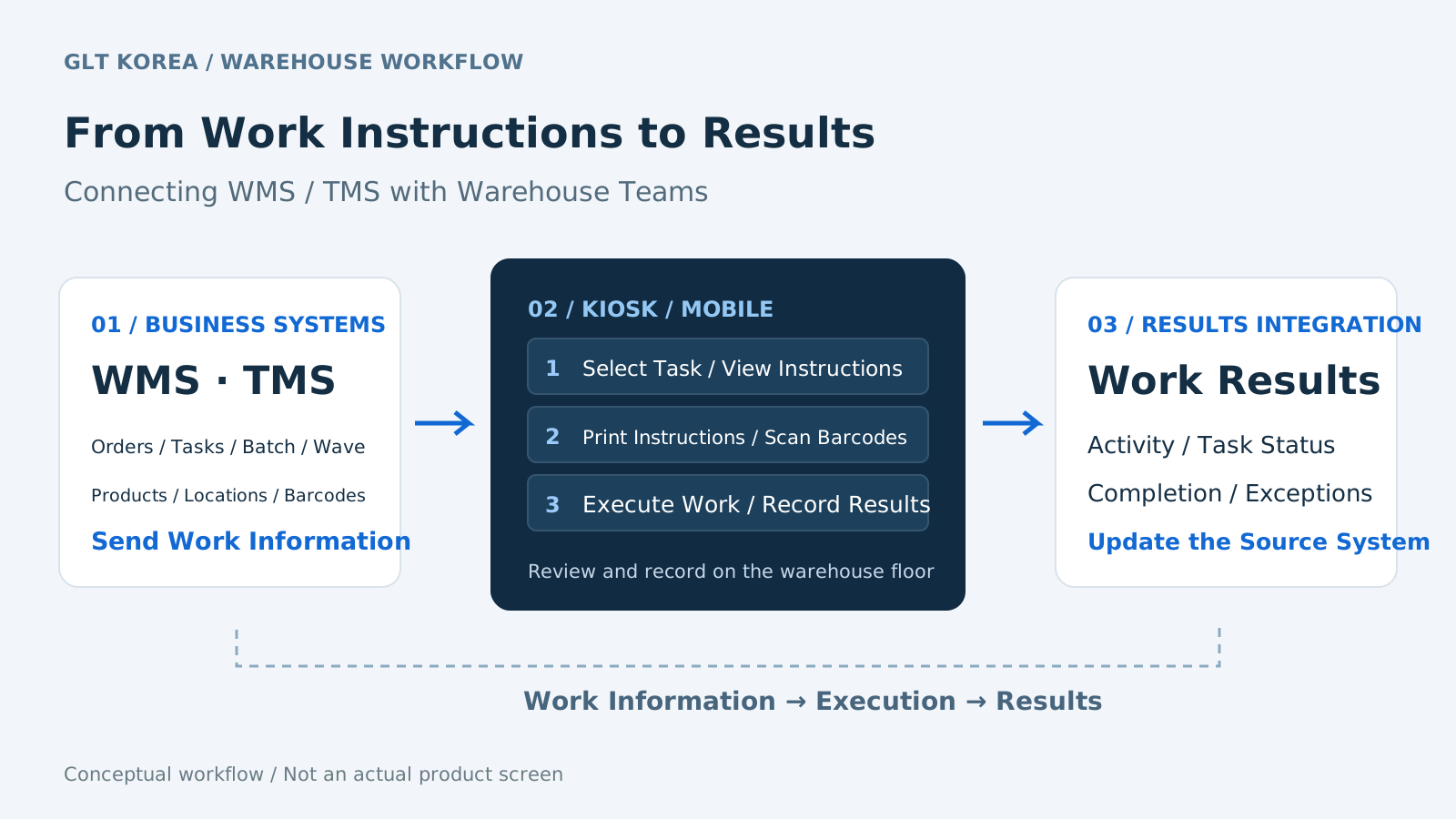

Korean labeling for imported cosmetics does not end with attaching stickers. You need to manage which revisions of labels to use for which products, where and how many labels are there, and how to reflect the results of your work in inventory. VAS (Value Added Services, Distribution Processing) WMS is a method of linking tasks such as labeling, packaging, and set configuration with inventory, location, and work orders.
This article was written by a participant in the global imported cosmetics project. Director Lee Sang-mok's freelance work experience before joining GLTBased on and industry documents, we have summarized the tasks to be reviewed by cosmetics importers and distributors and 3PLs that perform distribution processing. Customer name and product name are not disclosed.
If you have a product but can’t ship it because of the label,
- Looking for: Labels for each product are scattered across drawers and shelves, allowing workers to repeatedly check storage locations.
- Selection error: Similar packaging and colors, as well as older and newer labels, may result in bringing in labels that do not match the product.
- Quantity mismatch: There are rolls left, but there are not enough sheets available, or labels and scrap left over after a job are not reflected in inventory.
- Difficulty tracking: It is difficult to determine which version of a label was used for which task and how much.
If this problem is repeated across multiple brands, SKUs, and workshops, in addition to managing the arrival and departure of finished products, management is needed to identify labels as separate materials and connect them to work. Not all cosmetics companies need a separate system. First, determine if your existing WMS provides the functionality you need.
Scope of actual performance by Director Lee Sang-mok
According to career information confirmed by the company, Director Lee Sang-mok was working on a project related to global imported cosmetics when he was a freelancer. From process design/development design to development direction/testing/operation opening I did it. The functions below were also confirmed within the actual deployment scope.
| construction area | Confirmed performance details |
|---|---|
| Label inventory/location | Manage inventory and storage location of label materials and connect materials needed for work |
| Product/label comparison | Compare product and label barcodes to verify if the combination is acceptable for the job |
| discrepancy control | The system blocks work progress when the product/label combination does not match. |
| Reflection of work results | Deduct label material inventory based on job completion |
This resume is the current GLT member's personal experience prior to joining. GLT does not display the performance of the company contracted and performed at the time. The original screen/inspection documents and pre- and post-measurement performance figures that can be disclosed have not been included in this article. The detailed data structure and exception handling criteria below are examples of newly introduced designs compiled based on this experience, and do not reproduce all detailed specifications at the time.
Is this a VAS management method also used in the industry?
Yes. VAS, which directs labeling, packaging, and kitting into work orders and connects them to materials and workshops, is a task handled by WMS. SAP EWM's official documentation also cites labeling as an example of a VAS activity and explains packaging specifications as reference information for VAS work orders. However, ‘VAS WMS’ is the name of the business area explained here, and does not mean that all centers must introduce a separate dedicated product. SAP · Value-Added Services · SAP · Packaging Specifications
The packaging/Korean marking and label versions are divided as follows:
Imported cosmetics for domestic sale must meet applicable Korean writing and labeling requirements. The primary packaging, which is the container, and the secondary packaging that accommodates it may have different marking ranges. Not all products necessarily require stickers to be placed in domestic warehouses after customs clearance, as some products already have the appropriate markings. The location and timing of work are determined based on the actual import procedure and product condition. Article 10 of the Cosmetics Act · Article 12
You must check the labeling requirements and enforcement regulations for each package in the legal information, and labeling cannot be arbitrarily omitted just because the area is small. Functional cosmetics labeling and ‘attachment of screening certificate’ do not have the same meaning. Specific labeling text is managed based on review and approval by the responsible seller and quality/regulatory staff. Ministry of Government Legislation · Information for each package
You should check the differences in ingredients and text depending on the product, but not all colors necessarily require separate labels. The labeling standards also include a way to display colorants for each color of some color products. In addition, manufacturing numbers and expiration dates can be managed by existing markings or separate variable printing, so there is no need to create a new label material code for every lot. The scope of application of shrink films and sealing labels is also determined according to product, contract, and quality standards. Ministry of Government Legislation · Labeling standards and methods
From finding labels to recording completion
Below is an example business design you can use when considering new adoption. This is not the actual screen or the published specifications of a specific customer company.
| step | What to check in the system and on site |
|---|---|
| 1. Registration of standard information | Map approval labels, revision versions, and application start and end dates for each finished product, number, and packaging configuration. Required materials and quantities are determined by BOM or packaging specifications. |
| 2. Receiving and storage of materials | Record label material code, quantity, availability status and storage location. Conversion standards for rolls, sheets, and sheets are also established. |
| 3. VAS work instructions | Connect the product/lot/quantity to be worked on and the label/storage location to be used. If there are any shortages of materials, they will be checked before starting. |
| 4. Picking/matching | Compare work instructions with product/labels. Invalid combinations or deprecated versions are designed to not proceed without an approved exception procedure. |
| 5. Check work and quality | Check the attachment location, direction, readability and variable printing content. When replacing a label, procedures are also required to remove the old material from the workbench. |
| 6. Reflection of performance and inventory | Record the completed quantity and the quantity used, lost, and returned. Standards for transition between unprocessed/processed status, quality on hold, and available for shipment are set separately. |
For example, a hypothetical product COS-A-01label on LBL-A-01-V02, location L-01-03-AYou can connect . This code is for illustrative purposes only and is not an actual customer code. Product code, revised version of the label, finished product lot, and label receiving lot are different management items.
Barcode verification is not about ‘are two numbers the same?’
Finished product barcodes and label material barcodes are usually different identifiers. What to verify Is the currently approved label available for the product in this work?It is. Product, packaging, version, application date and required lot conditions must be checked against the approved mapping.
It is not possible to check the manufacturing number or expiration date with just the general EAN/UPC product identification code. If lot/due date verification is required, batch information from the work order, a separate scan, or a barcode containing that data must be linked. GS1 also separates product identification and batch/expiration information into different data items. GS1 · Application Identifiers
Just passing a scan does not prove the actual attachment location, printed content, or even the physical actions of the operator. Management of approval text, confirmation of bench material replacement, sample or full inspection, and exception approval records must be designed together. Reviews are made to ensure that label processing completion, quality determination, and shipment acceptance are not processed in the same state.
Expected effects are confirmed with measurable items
The value of this system lies in reducing the burden of label searching and double-checking, detecting incorrect material selections during operation, and maintaining a trace of usage. The size of the effect will depend on existing operations and data quality. Before and after introduction, it is recommended to measure the following items by setting the same work type, quantity, and personnel conditions.
| Verification items | Standards to be recorded before and after introduction |
|---|---|
| Search/preparation time | Time from receiving instructions to preparing materials for the same type of work |
| available stock | The difference between the available number of items and the system, and whether loss, return, or disposal are reflected. |
| Error/Rework | Number of blocks with incorrect combinations, number of incorrect attachments and rework discovered during inspection. The number of blocks and the actual defect rate are counted separately. |
| waiting for material shortage | Delays and waiting times due to lack of labels |
| Check history | Time required to track product, lot, label version, and usage for a specific job |
Which company should I review first?
- A cosmetics importer and distributor that manages product and label versions of multiple imported brands.
- A 3PL/distribution processing center specializing in cosmetics that must distinguish between instructions for each shipper and auxiliary materials.
- Brand operator with increased Korean label, set/promotional packaging and repacking work
- A logistics center that has a WMS for finished products, but labels are managed using Excel and manual ledgers.
Especially when problems with material selection, version management, and work history occur together, business rules and system connections must be designed first rather than a single screen. Based on the inventory accuracy of the existing WMS, ERP linkage, and worker terminal environment, expansion modules or separate VAS management areas can be reviewed.
Frequently Asked Questions
Do I need to replace my existing WMS?
Replacement is not a prerequisite. Divide the roles of inventory, lot, and location managed by the existing WMS and VAS work, and check the possibility of linking work orders, reservations, and usage performance.
Can I just introduce a barcode scanner?
Approved product/label mapping and revision management come first. Since errors cannot be identified even when scanning incorrect standard information, standard information approval and exception handling must be designed together.
Do I need to register new label materials for each lot?
It depends on how each product is displayed. Establish management standards by distinguishing between fixed text labels, variable print data, material receipt lots, and finished product lots.
Does label verification ensure legal compliance?
The system supports matching, blocking, and history management according to approved rules. Legal compatibility of the text and actual attachment/quality judgment are not automatically guaranteed and require approval and inspection by the organization in charge.
To review our center's VAS assignments
Please summarize representative products/label samples, label storage locations/inventory management methods, and the scope of linkage between work instructions and the current WMS. You can start with a sample that masks customer and transaction identifying information. Through business analysis, GLT specifies the connection scope of master, task, inventory, and verification as well as field test standards. The scope of introduction is confirmed through customer-specific business analysis and linked verification.
WMS tasks and introduction scope · Worker contact point/kiosk connection · Logistics process/system design · Director Lee Sang-mok’s areas of practice
Sources and writing standards
The performance experience and actual construction functions were confirmed with Director Lee Sang-mok and reflected in the information provided by the company. The work structure was compared with SAP's VAS and packaging specification documents, the labeling-related explanation was compared with the National Legislation Information Center and the Ministry of Government Legislation, and the barcode data was compared with GS1 official data. The data confirmation date is October 26, 2026, and this date is not indicated as the project execution date or the final manuscript review date by Director Lee Sang-mok. The statutory descriptions in this text are an overview of what is needed for system design and are not a complete list of product-specific labeling items.