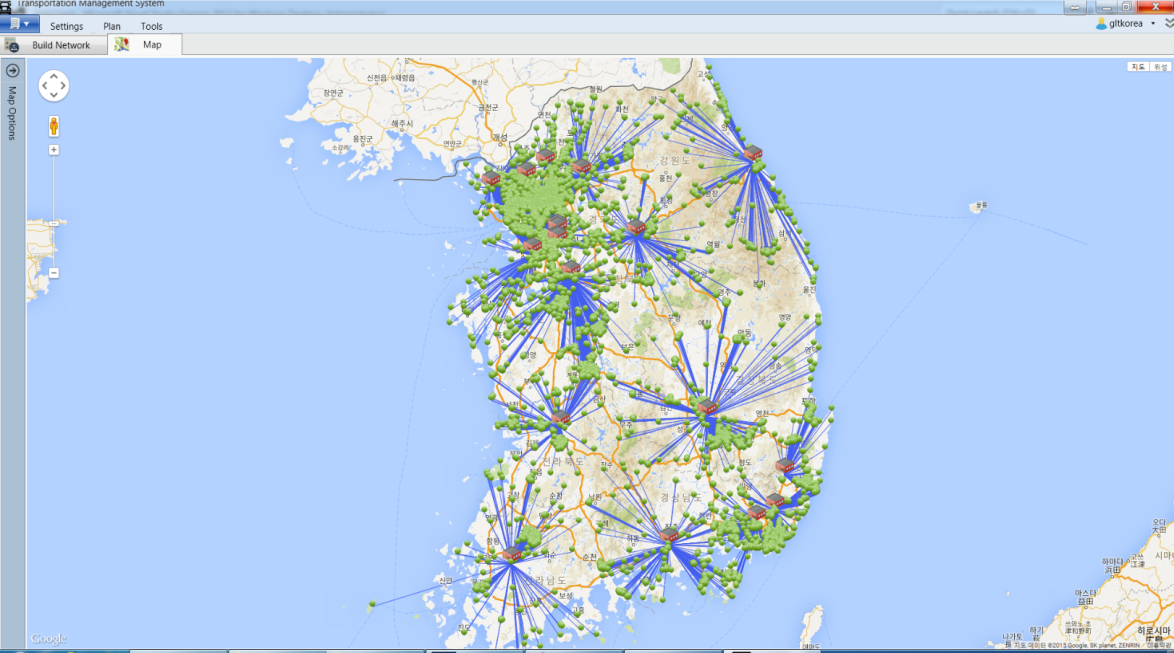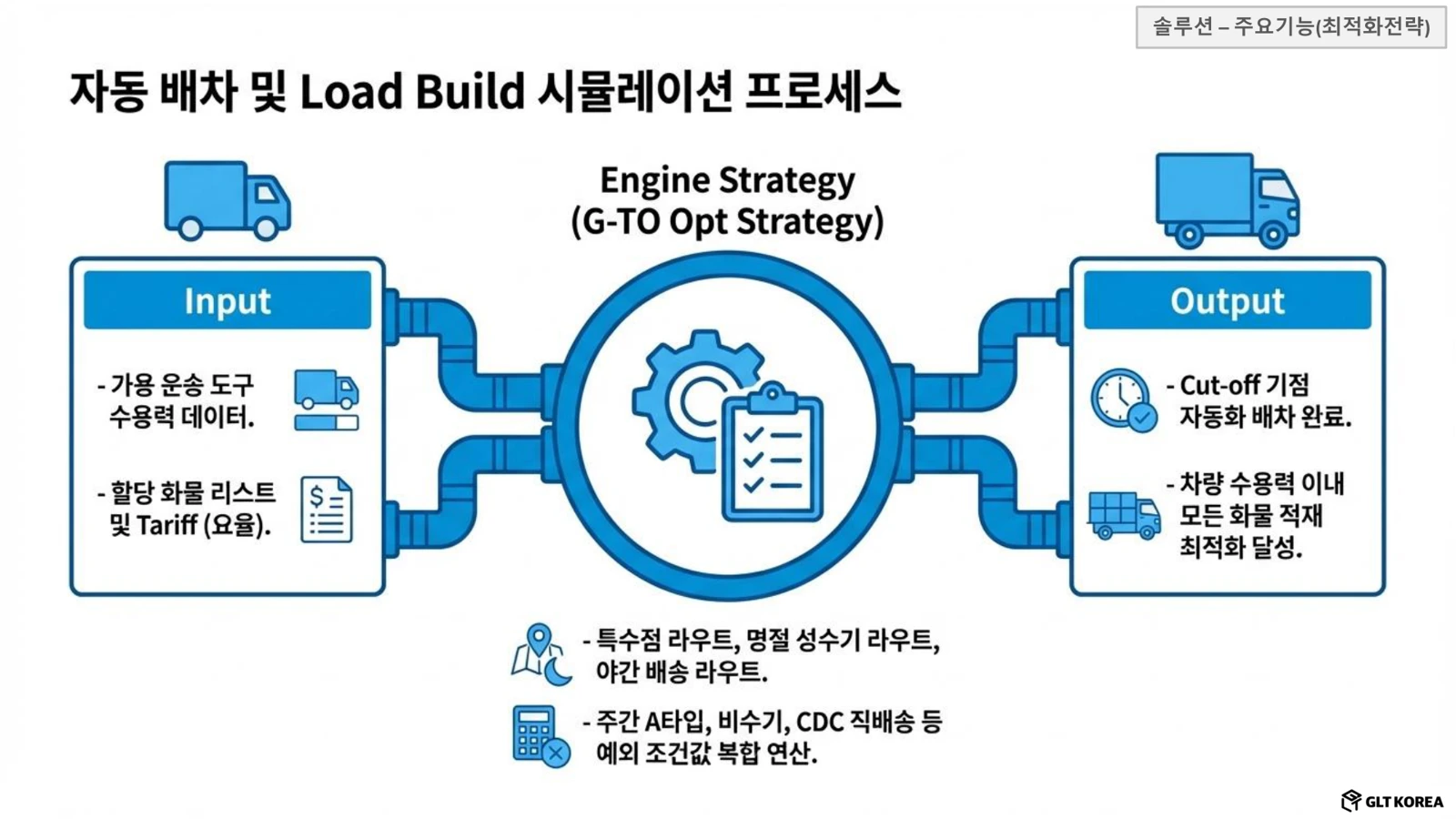
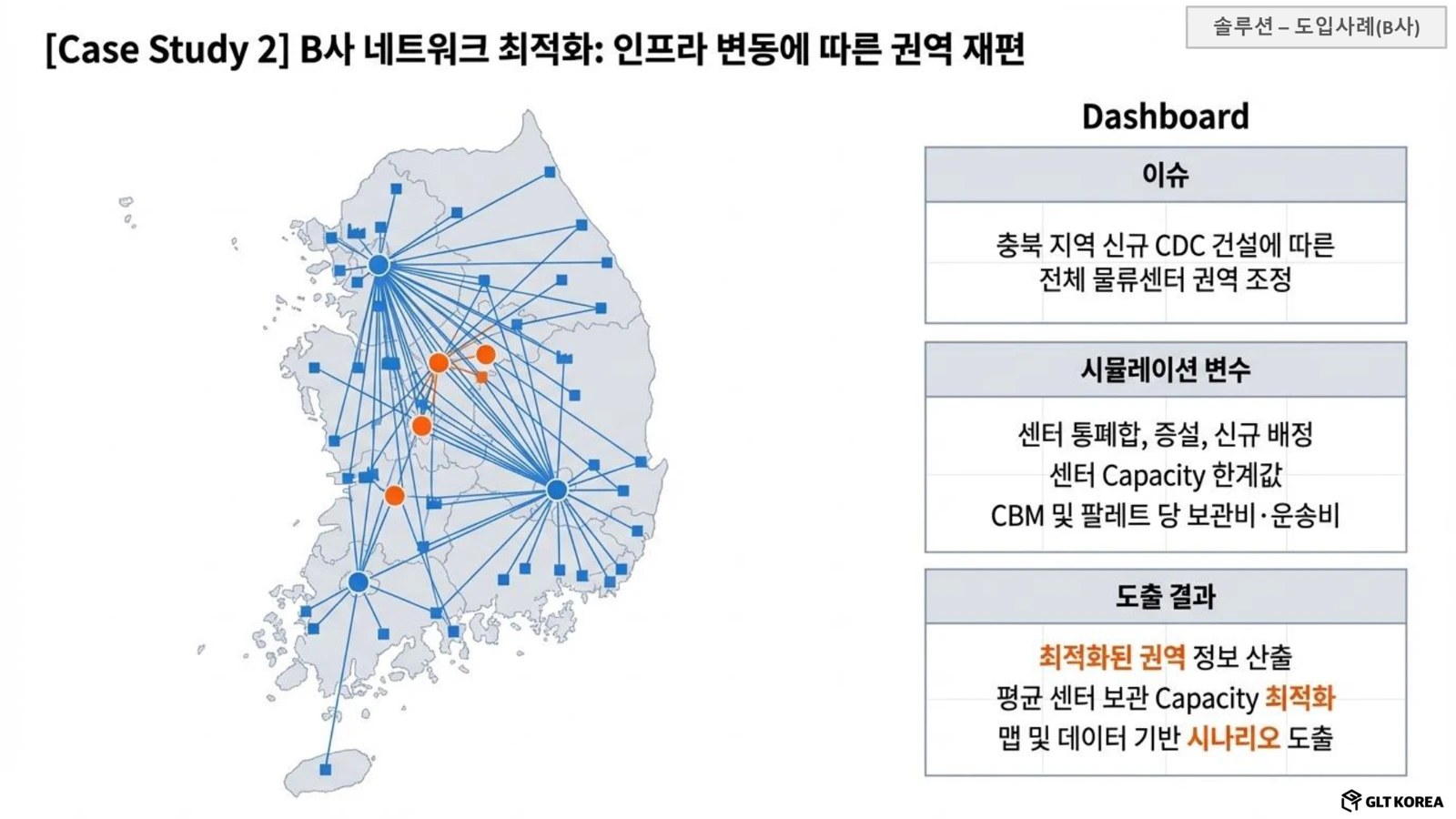
The decision to create a new facility also changes the existing center's stores, volume, storage costs, and trunk and delivery costs. Company B's case is a network optimization case that analyzed the area and cost structure of the entire logistics center in line with the establishment of the CDC in the Chungbuk region.
Customer's operational challenges and scope of GLT
In the introduction material, Company B is described as a company that operates several logistics centers and an agency delivery network. GLT is introduced as an example of center volume adjustment, cost analysis due to center change and relocation, and regional adjustment according to the new CDC. The customer name maintains the anonymity of the data.
What data did you compare?
| input | Review Content |
|---|---|
| facility/area | Location of existing centers and candidate sites, stores in charge and volume for each center |
| Processing/storage capacity | Center CAPA and cargo volume, unit CBM or pallet-based storage cost |
| shipping cost | Transport costs based on unit CBM or pallet and supply conditions between facilities |
| change scenario | Add/delete/relocate center, change CAPA and storage/transportation unit price |
How did you use the analysis results?
- Compare regional alternatives connecting new CDCs with existing centers.
- Check the responsible area and logistics network on the map and review the Excel results together.
- We support facility decision-making by comparing storage CAPA and volume distribution for each center.
The data presents scope for performing regional reorganization and cost comparison. Since the final verifiable reduction rate and inspection date are not separately presented in this case, it is not expanded to quantitative reduction performance.
Sources and Related Materials
G-TO Solution Introduction (2026) Page 48 · G-TO·TMS Introduction (October 2025) Page 19. This is an implementation example included in GLT’s own introduction material.