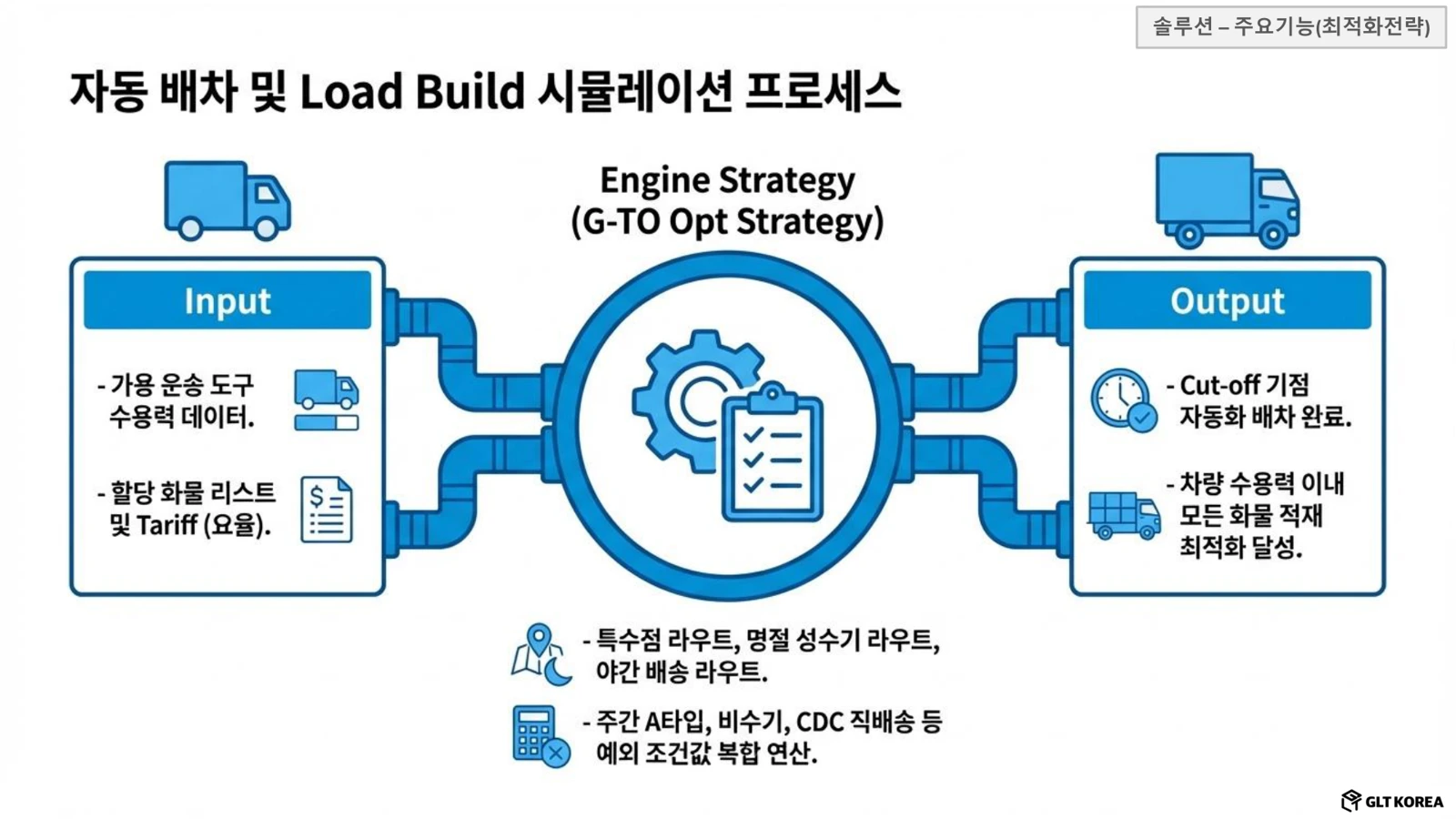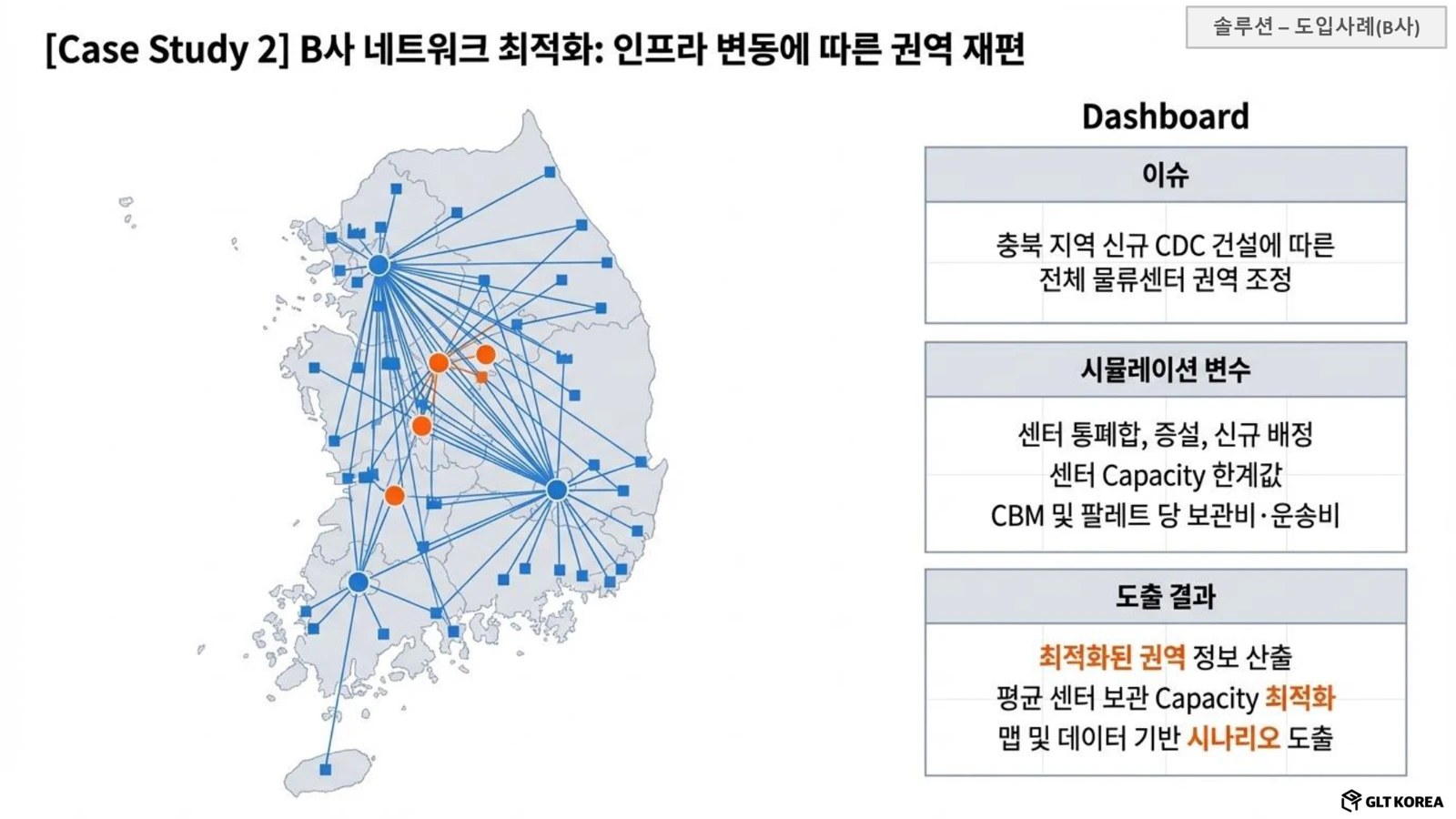
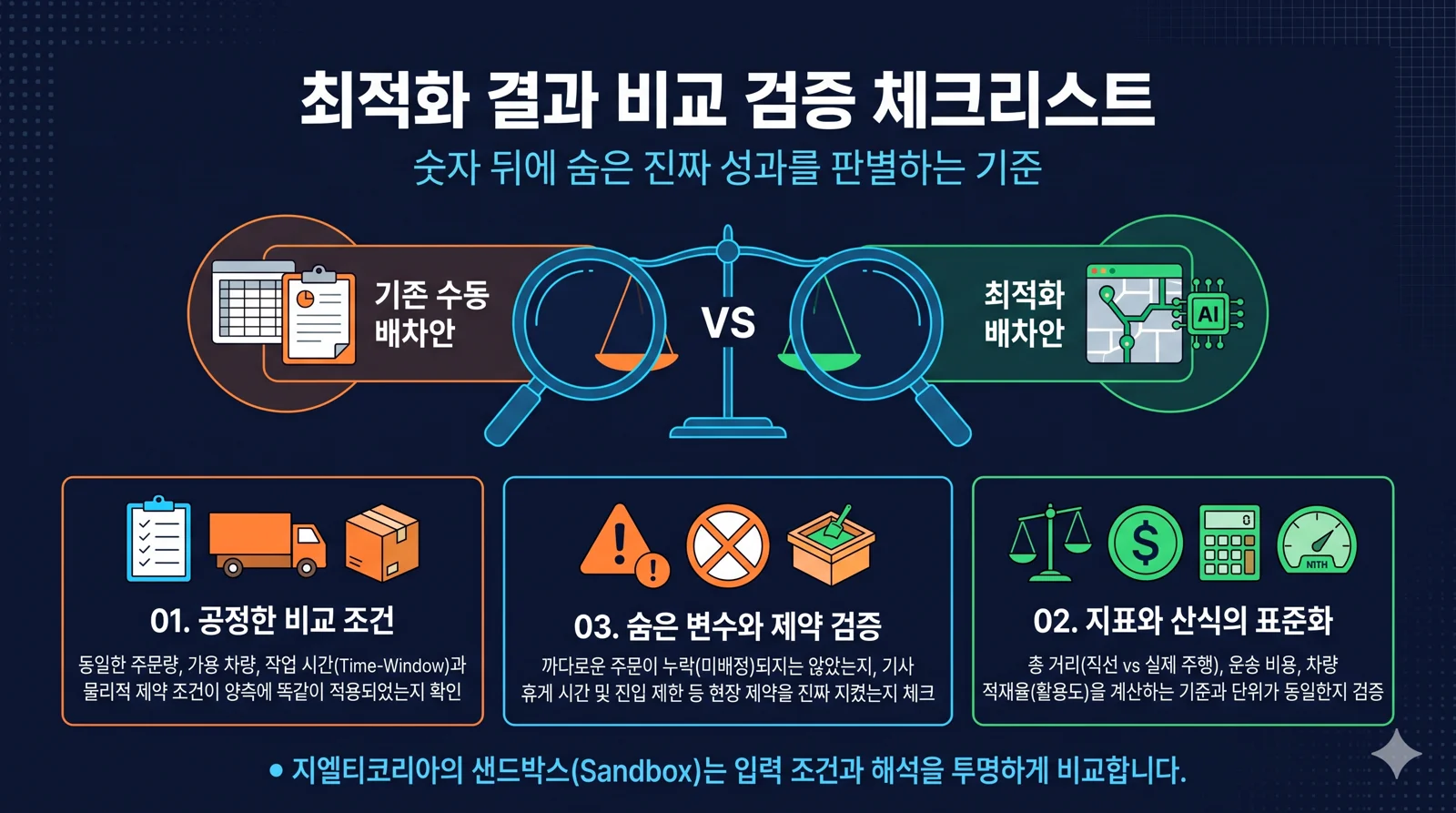
The effectiveness of optimization is difficult to judge based on the final numbers of cost or distance alone. It is necessary to check whether the same orders, resources and constraints were applied, whether any orders were missed, and whether the same indicators and formulas were compared.
We start with fair comparison conditions.
| inspection area | What to check when comparing |
|---|---|
| input conditions | Are the target orders, volume, available vehicles, and base period set the same? |
| site constraints | Were delivery times, access restrictions, loading capacity, and operation/rest rules applied equally? |
| Indicator/Formula | Are the included items and units of total transportation cost, mileage, loading ratio, etc. the same? |
| execution environment | Have you recorded engine version, server environment, computation time limits and stopping conditions? |
What results do you see other than cost?
- Unassigned orders: View the number of missed orders, their reasons, and additional processing costs.
- Constraints met: Indicates whether required constraints have been violated and whether the conditions have been relaxed.
- Operational Impact: Identify changes in plans, additional vehicles, waiting for unloading and on-site coordination burden.
- Reproducibility: Archive input data, conditions, and engine versions so they can be reexamined under the same conditions.
Distinguish between simulation and ground truth performance
A simulation is the result of comparing alternatives under defined data and constraints. Actual operational performance may be affected by traffic, on-site queuing, order variations and execution process adjustments. The base period and included costs for both outcomes should be reported separately.
When presenting a savings rate, write down the comparison target, calculation formula, measurement period/sample, and exclusion conditions. It is easier to interpret the results if you distinguish between target values, hypothetical examples, test results, and operational measurements.
What do we check in the sandbox?
First, determine the input conditions and result items of the scenario to be reviewed. Since the actual engine experience is a preparatory step provided after linking to a separate execution server, the description and images on the current public page do not represent calculation results or operational performance.
Sandbox preparation statusYou can check the scope of provision and discuss the conditions and methods of actual comparative verification during the introduction consultation.