Features currently available
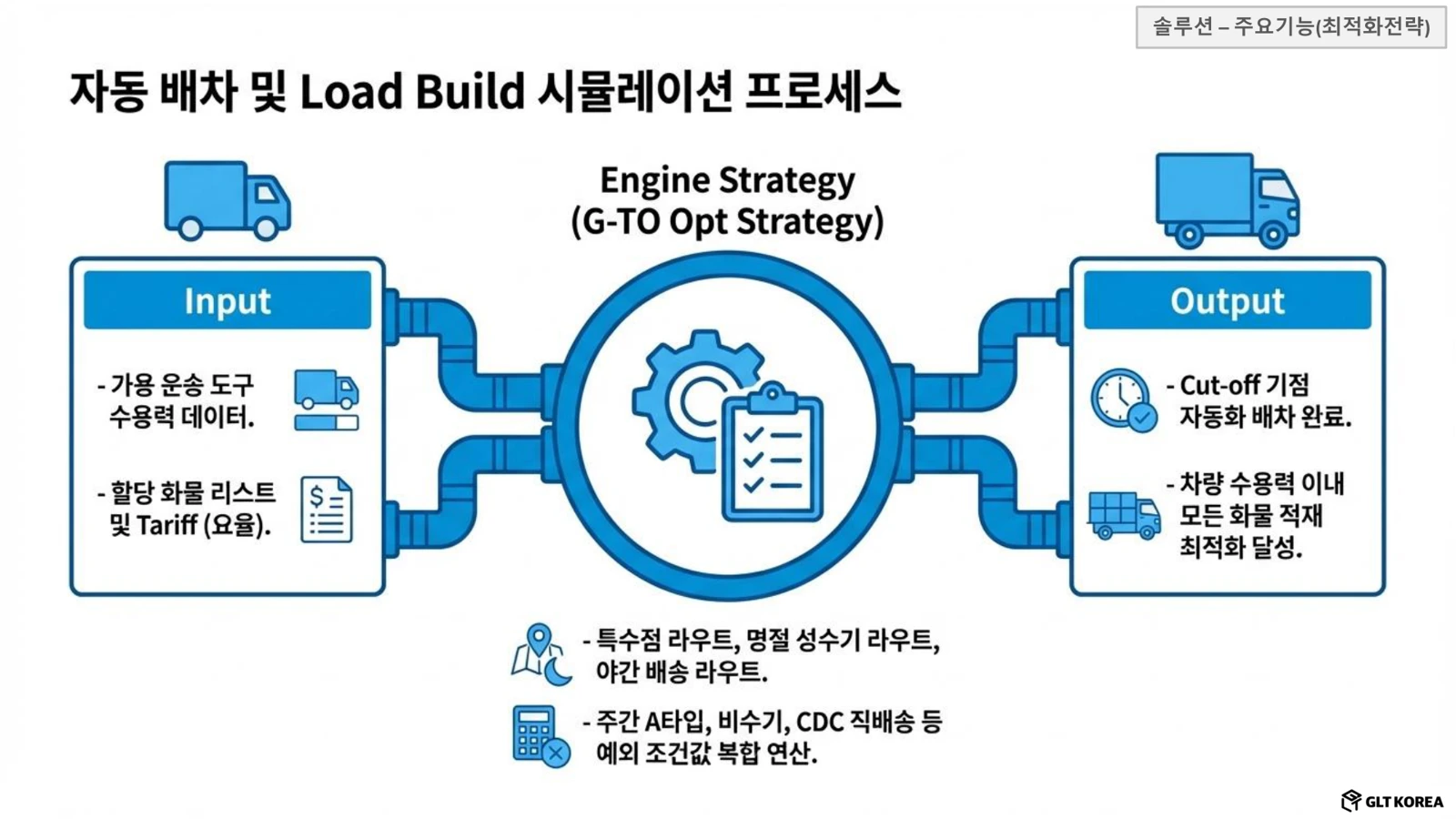
It provides vehicle-specific assignment of transport orders, route optimization, master-based load build, use of fixed route and dispatch history, and scenario storage and comparison.

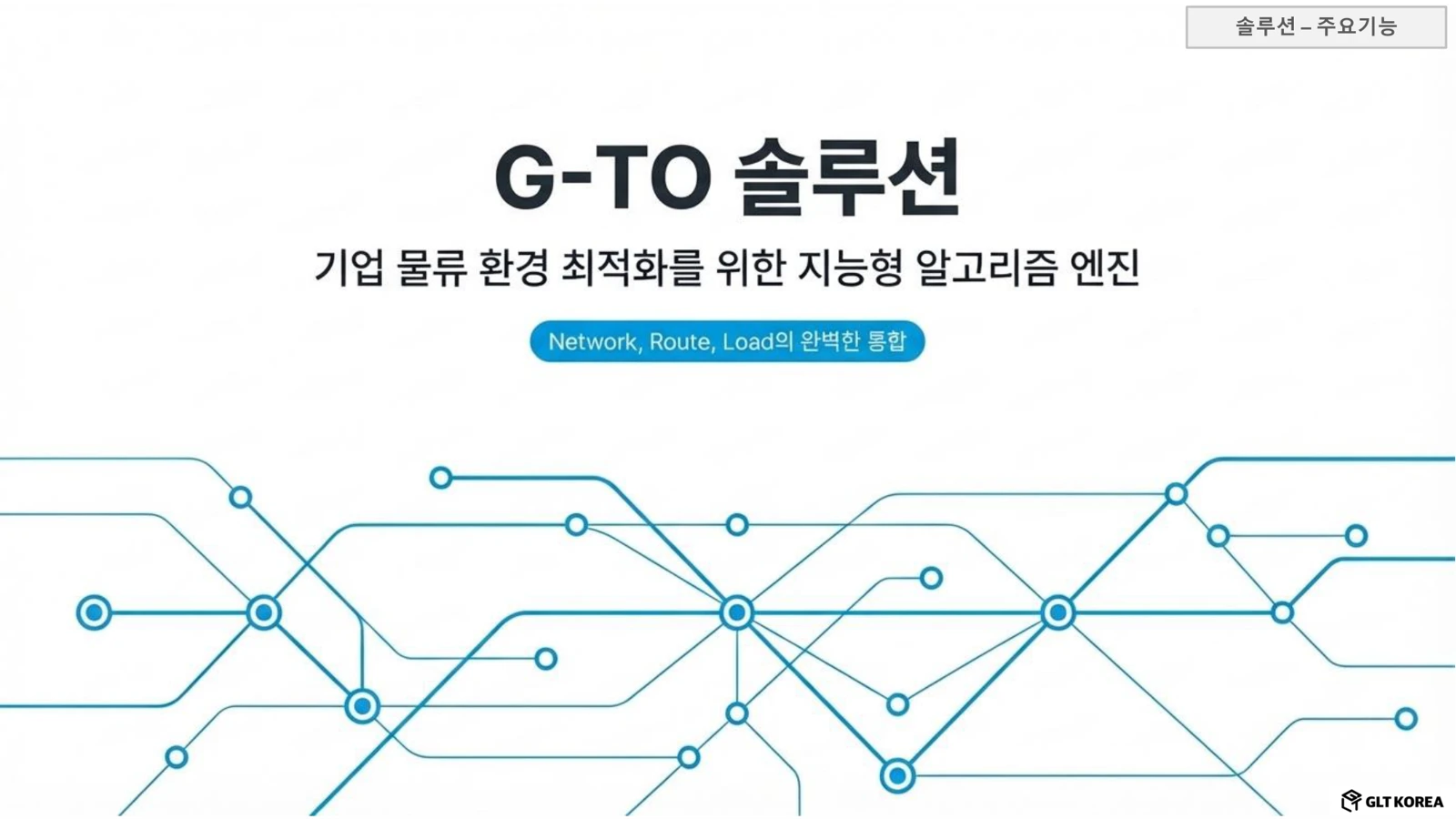
Based on orders, vehicles, facilities, and operational constraints, we construct dispatch and route plans for each Load, Stop, and Shipment. It can be used independently from TMS, and provides guidance on expanded application ranges such as vehicle configuration and rearrangement vehicles.
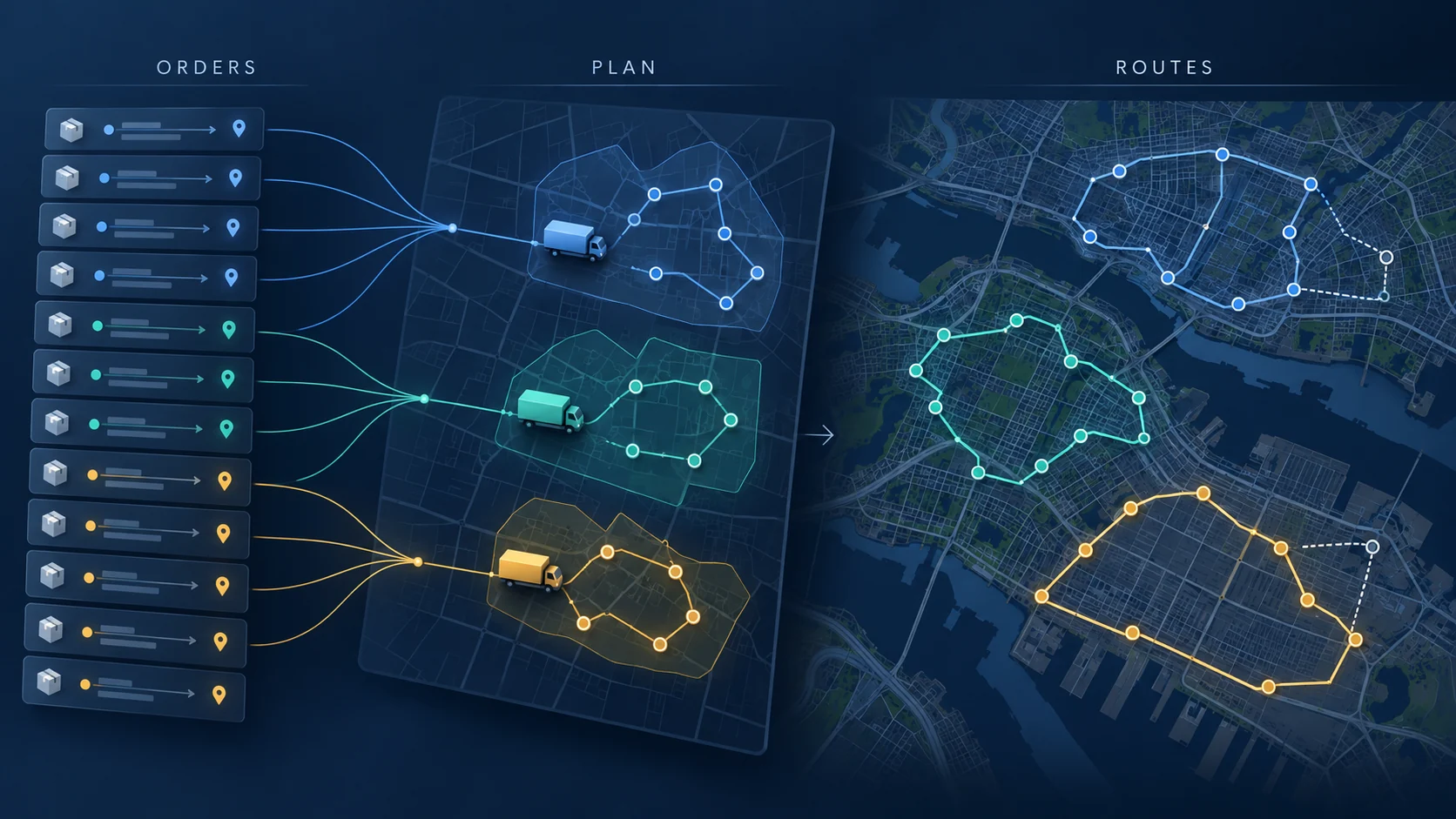
Based on the TO's provided functions, we discuss the scope of connection and advancement for each customer.
It provides vehicle-specific assignment of transport orders, route optimization, master-based load build, use of fixed route and dispatch history, and scenario storage and comparison.
Connects ERP/TMS orders, vehicles, freight, and distance with on-site progress. Optimization plan confirmed, mobile delivery of articles and real-time redistribution coverage are designed according to each customer's data and business procedures.
Active vehicle matching, multi-dimensional compartment and specialized loading calculations, and AI-based initial planning and constraint verification are reviewed for application by checking separate data and support versions.
Target: ready during November 2026
Currently, we provide scenarios for illustrative purposes only. The actual NO·TO engine experience will be released after connection and verification are completed.
TO Experience Information ↗The provided modules, applicable versions, data/interfaces, and construction scope for each customer are confirmed during introduction consultation.
The basis of TO is to organize orders into transport bundles (Load) and visit order (Stop) for each vehicle. Select the standard master, history, and fixed route methods presented in the introduction to suit your work and compare the results.
Transportation order, loading/unloading time window, weight/volume/quantity and unit, available vehicles, facility and distance/freight
Objective function, vehicle capacity, stopping point/distance/operation time, entry/exit/return conditions
Plan, guidance, and result report by Load·Stop·Shipment, check non-assignment and restrictions
After confirming the plan, transfer it to operating systems such as TMS and mobile
Basis: G-TO Introduction (2026) pages 29-37, G-TO·TMS Introduction (2025.10) pages 29-37·42, POL-TMS-020 input reference policy. Individually provided functions and screens are checked according to the applicable version, contract, and scope of connection.
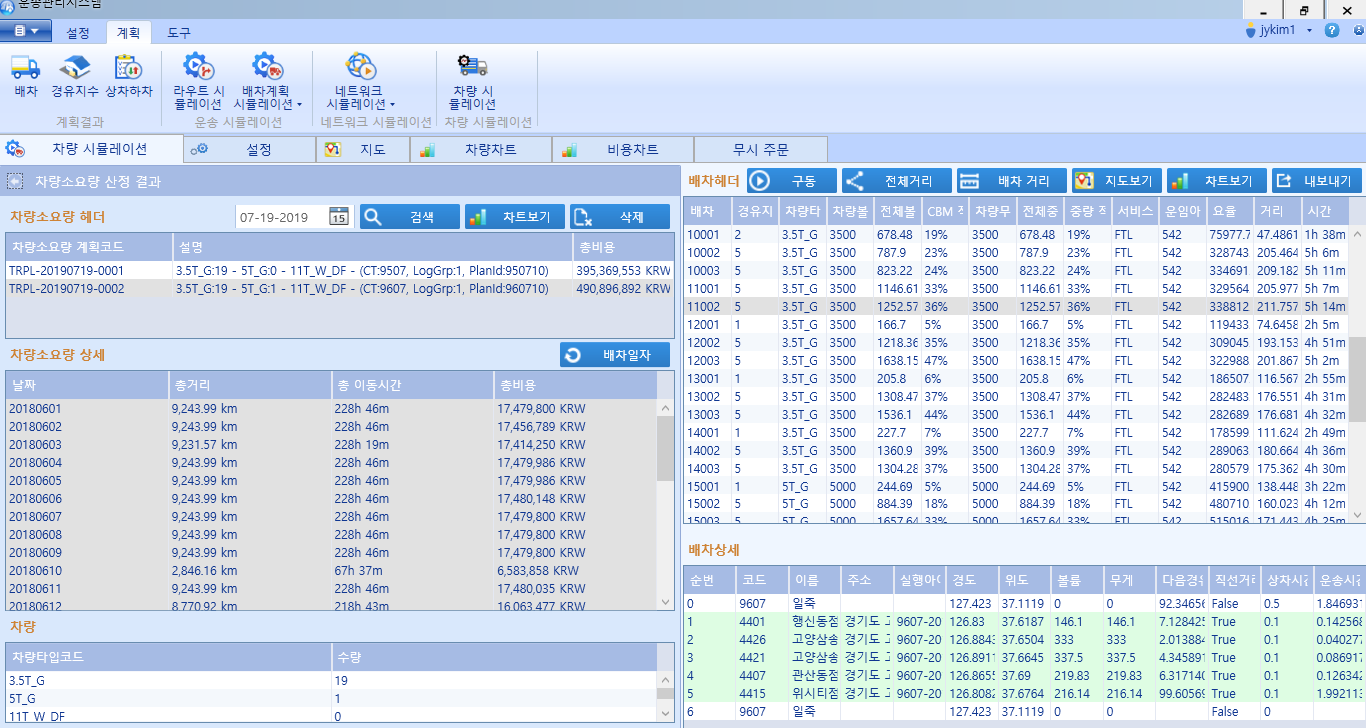
Original Korean source material. See the English explanation on this page.
Yes. TO is a transportation optimization solution that can run independently of TMS. Dispatch and route plans are reviewed based on orders, vehicles, and operating conditions, and operational information such as execution status, driver acceptance, and fares together define the scope of connection with TMS or related systems.
NO Network Optimization See also ↗Vehicle configuration simulation and dynamic rearrangement are customer-specific expansion and linkage functions that have implementation examples. Advanced items such as matching, compartments, and AI combination undergo separate verification to confirm the scope of application.
This is an analysis that compares the composition ratio of fixed and temporary vehicles, the number of vehicles required by tonne class, and cost based on the past 1 to 3 years' cargo volume.
Applicable conditionsIn addition to dispatch calculations, operation history, fixed costs, unit price for rental vehicles, and repetitive simulation are required.
By reviewing cargo characteristics, vehicle location, past transportation performance, and preferred/return routes, we compare vehicle candidates with empty/return utilization opportunities.
Applicable conditionsLocation and transportation performance and driver acceptance history must be linked in operating systems such as TMS and information networks.
We review transportation plans to reflect changes such as new orders, cancellations, and delays in loading and unloading, and design ways to reduce the impact of changes to existing routes.
Applicable conditionsCollects the execution status and delay information of orders and vehicles and defines the allowable range of changes to confirmed and in-progress work.
We review the scope of application that takes into account loading conditions such as temperature range, overall loading, compartment capacity, unloading sequence, and thermal expansion and axial load.
Applicable conditionsFor the scope where loading location, physical properties, and load calculations are required, consider combining them with specialized loading calculations.
We distinguish between optimizing the combination, dispatch, and time of designated routes and stopping patterns and redesigning areas, vehicle types, and vehicles based on past history.
Applicable conditionsDetermine the scope of analysis for regional design by comparing daily dispatch calculations with multi-day operation history.
We create an initial plan using past dispatch patterns and review a combination method that verifies the feasibility of executing constraints defined by Rule/Solver.
Applicable conditionsLearnable dispatch history, rules/masters, and verification standards are required, and decisions are made based on conditions defined in the data.
These are the data and result items to prepare when negotiating the scope of analysis. Detailed fields, units, API specifications and support conditions are provided for each applicable version. We check customer-specific expansion and linkage conditions for vehicle configuration and rearrangement, and upgrade review conditions for matching, compartments, and AI combination.
| analysis area | review data | Results to check |
|---|---|---|
| Basic transportation/dispatch plan | Transportation order, loading and unloading, vehicle information, operating conditions | Review criteria for order/vehicle allocation and route planning |
| Review of fixed and commercial vehicle composition | 1 to 3 years of cargo volume and dispatch history, vehicles by tonnage class, fixed costs and vehicle unit price | Comparison of required number and cost by vehicle composition ratio and tonne class |
| Vehicle matching review | Cargo characteristics, vehicle location/transportation performance, preferred/return routes and acceptance history | Comparison of vehicle candidates and possibility of use of empty and double trains |
| Review of re-car scope | Rules for adding/cancelling orders, delays/vehicle status, confirming operations and allowing changes | Plans/route subject to change and impact on existing transportation |
| Review of compartment and loading conditions | Compartment/vehicle specifications, product properties/temperature range, loading/unloading sequence and load conditions | Combined range of compartment/item allocation and specialized load calculations |
| Fixed route/area review | Designated route/stop pattern, order/operation history, vehicle type/vehicle information | Haengjim, dispatch, time alternatives and area, vehicle type, and number of redesign scope |
| Review of AI/Solver combination | Historical dispatch data, initial plan, rule/constraint master and verification criteria | Scope of use of initial planning and constraint verification results |
Distributors/manufacturers with large volume fluctuations, 3PL/4PL/freight information network operators, same-day delivery/milk run/fixed circuit transport companies, and multi-temperature/compartment transport companies.
We review an analysis comparing the configuration alternatives of fixed and commercial vehicles in tasks with large volume fluctuations such as beverages, ice cream, and distribution.
Considering ongoing work in same-day delivery, pickup, milk run, etc., determine the scope of need for redeployment and plan to maintain it.
We design application plans by classifying constraints on combination of fixed circuit routes, area redesign, and multi-temperature/compartmental transportation by task.
From data preparation to existing system connection, result review and introduction procedures. This is a frequently asked question when determining the right coverage for your business.
TO introduction consultation ↗Yes. TO can be used independently of TMS. In the existing system, orders, vehicles, and operating conditions are communicated, and who will confirm the calculation results and reflect them in the execution system is determined.
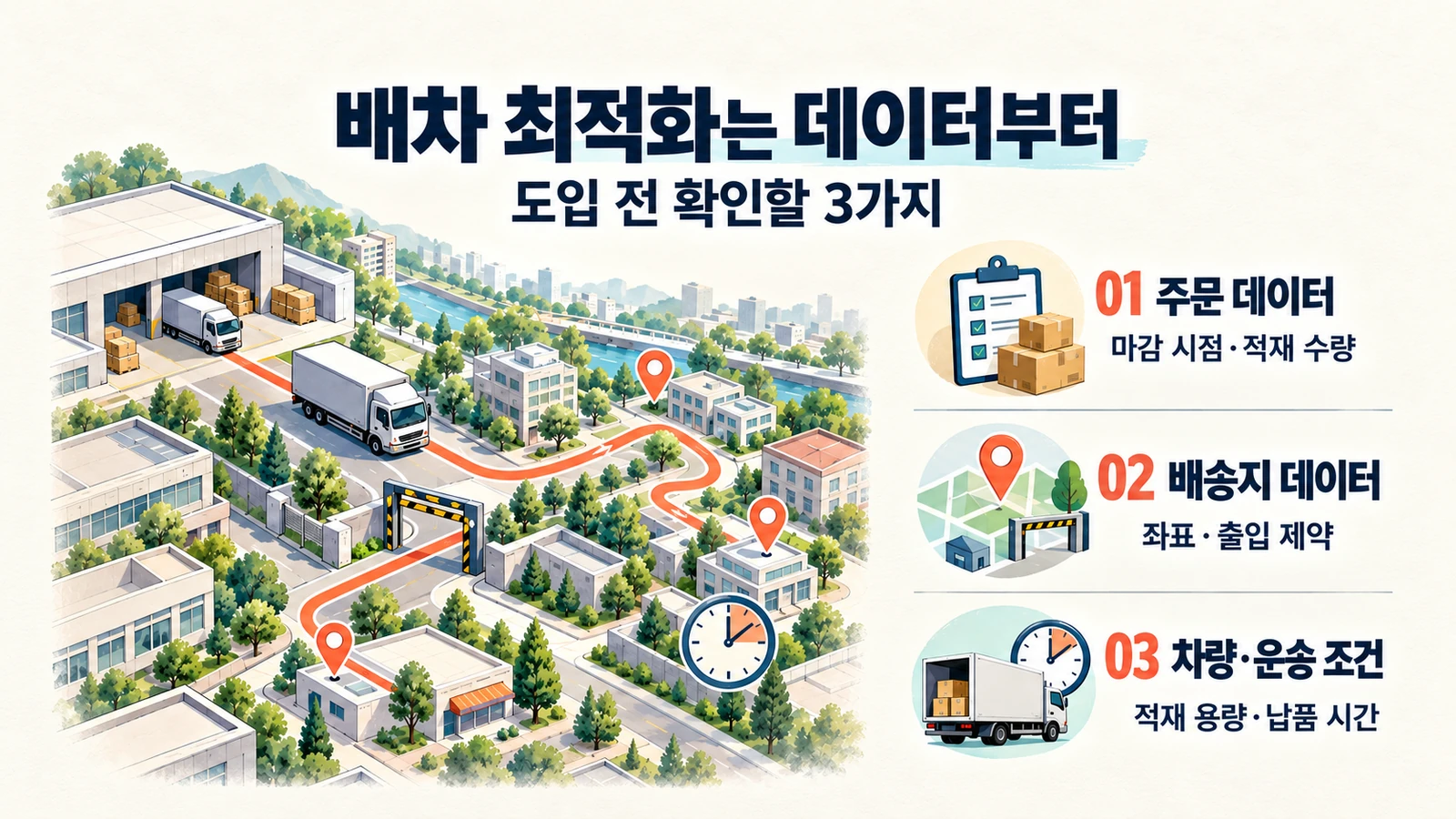
View existing systems and the role of optimizationOrder loading and unloading locations, time window, quantity, weight, volume and units, and available vehicles and capacity are required. Site conditions such as entry restrictions, registration, and return are also organized, and required input values are confirmed according to the application version and scope of work.
Information on order, master, and dispatch restrictionsIt is possible. We start by looking at the order, vehicle, and delivery address data we have, and determine the order of supplementing missing items that affect the results, such as address, loading unit, and time window. Set initial verification conditions based on data quality and availability.
Input data preparation example and checklistUnassigned orders are separately checked and vehicle capacity, time window, entry, and loading conditions are checked. After reviewing the feasibility of adding additional vehicles or adjusting operating conditions, the representative compares alternatives as long as they remain within the required constraints.
Results comparison criteria including non-assignment and restrictionsYou can review the application of redistribution within the scope of each customer. First determine the progress status of orders and vehicles, the rules for allowing changes to confirmed work, and the scope of mobile delivery, and check the delivery version and on-site connection conditions.
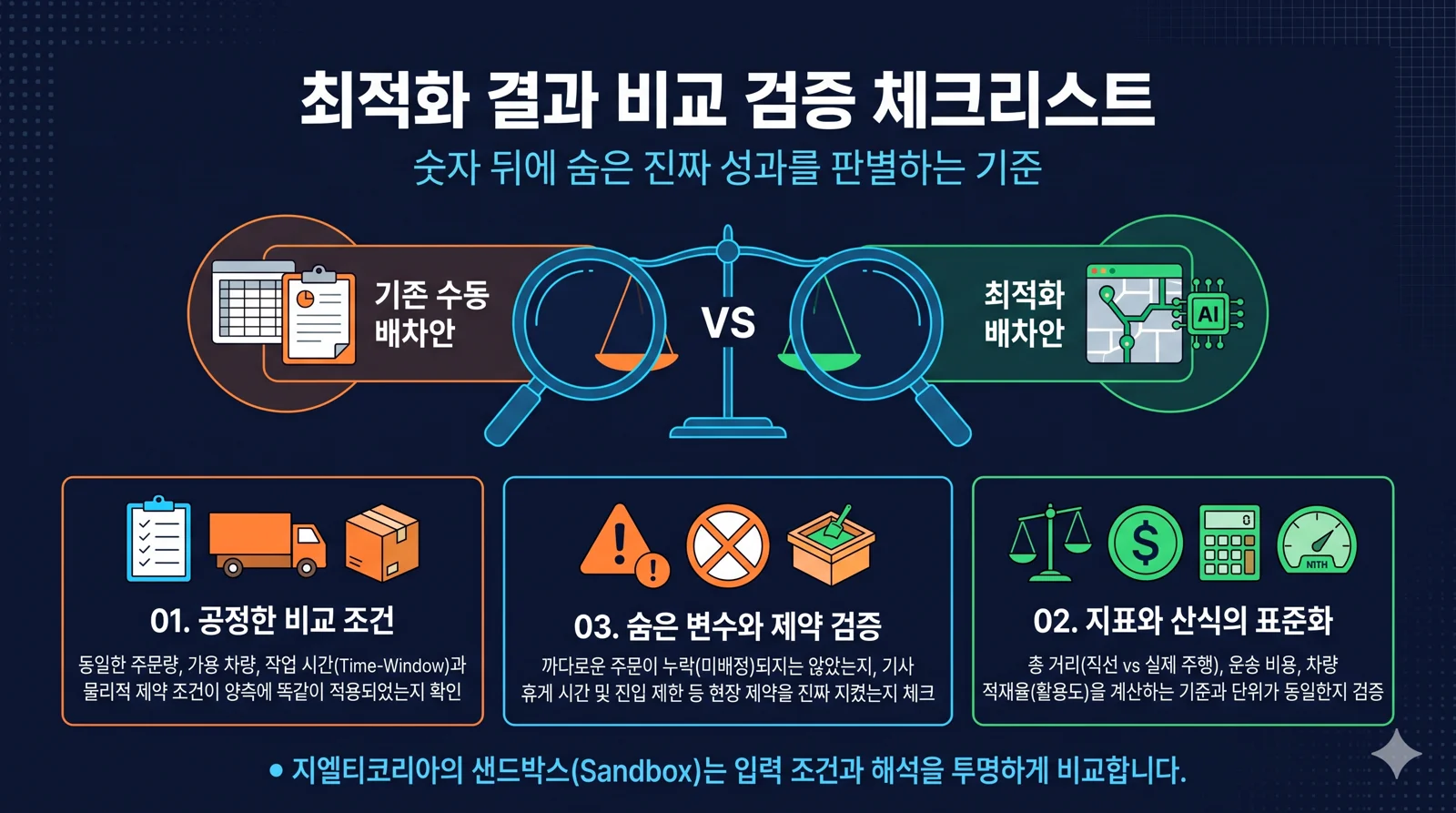
Example of order addition and re-carry constructionCompare current plans and alternatives based on the same orders, available vehicles, constraints and costs. It checks not only distance, transportation cost, and number of vehicles, but also non-assignment and constraint fulfillment, and distinguishes between simulation results and actual operational performance.
Optimization comparison verification methodThe scope is determined in the following order: task definition → data check → comparative verification → necessary system connection → operation conversion. Schedule and cost are calculated based on order/vehicle size, complexity of constraints, and number of connections.
Introduction procedure and factors determining period and costInitially, please let us know the type of work, order/vehicle size, improvement tasks, and data items you possess. Verification using actual data is conducted after first discussing the scope of provision and use and delivery method.
TO introduction consultationPlease tell us about the most difficult situation in dispatch right now. We review the required data, site constraints, and scope of connection with existing systems.
Please choose a situation that is close to our company.
Even if you don't have any data yet, you can tell us about your current situation. Information that is difficult to disclose may be reviewed as a sample with identifying information masked.
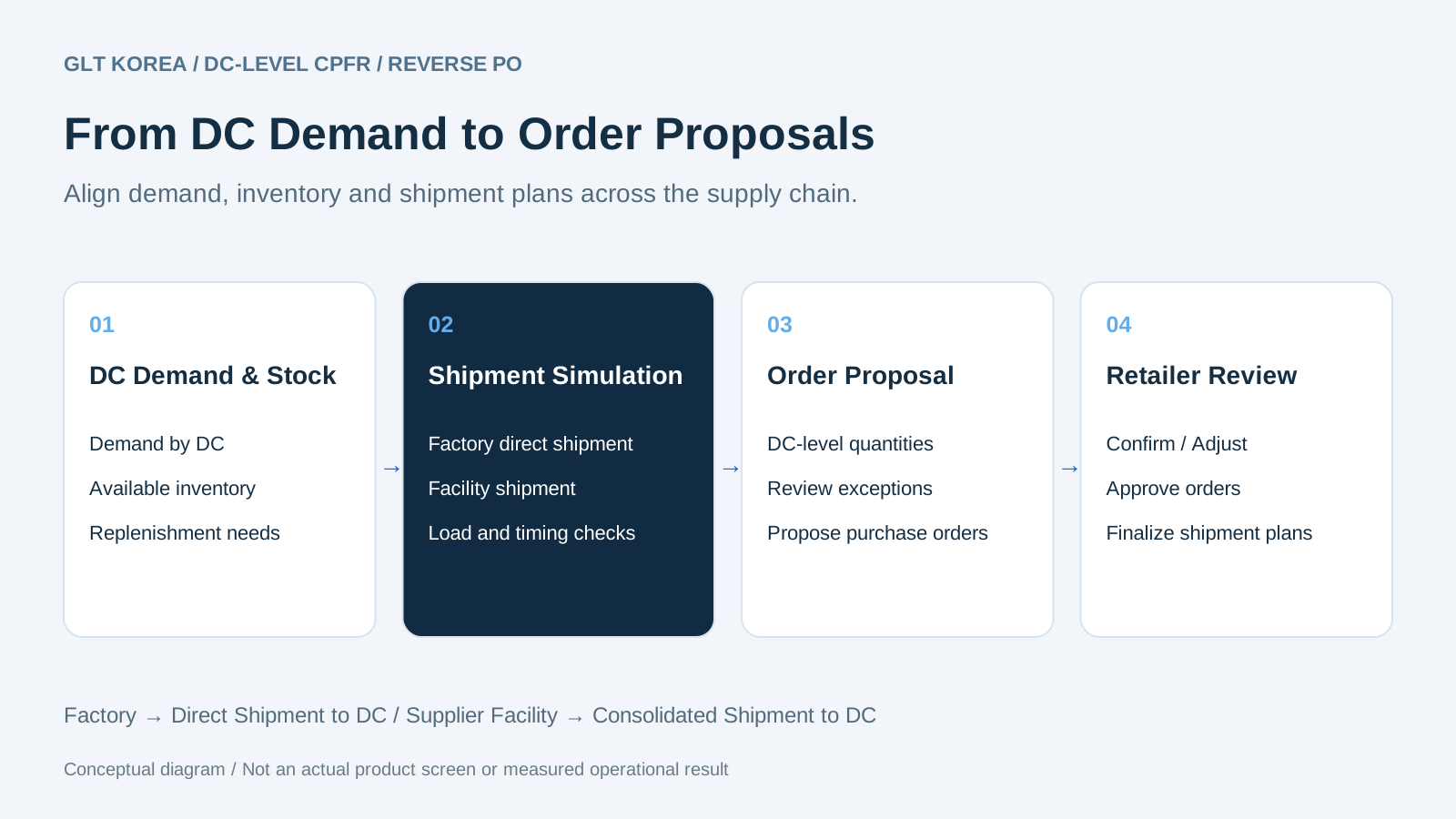
GLT contracted directly with the customer and independently delivered detailed design, development, testing and go-live for this DC-level CPFR and Reverse PO project. See how DC demand and inventory inform ordering and shipment plans, with targets and expected benefits clearly identified.
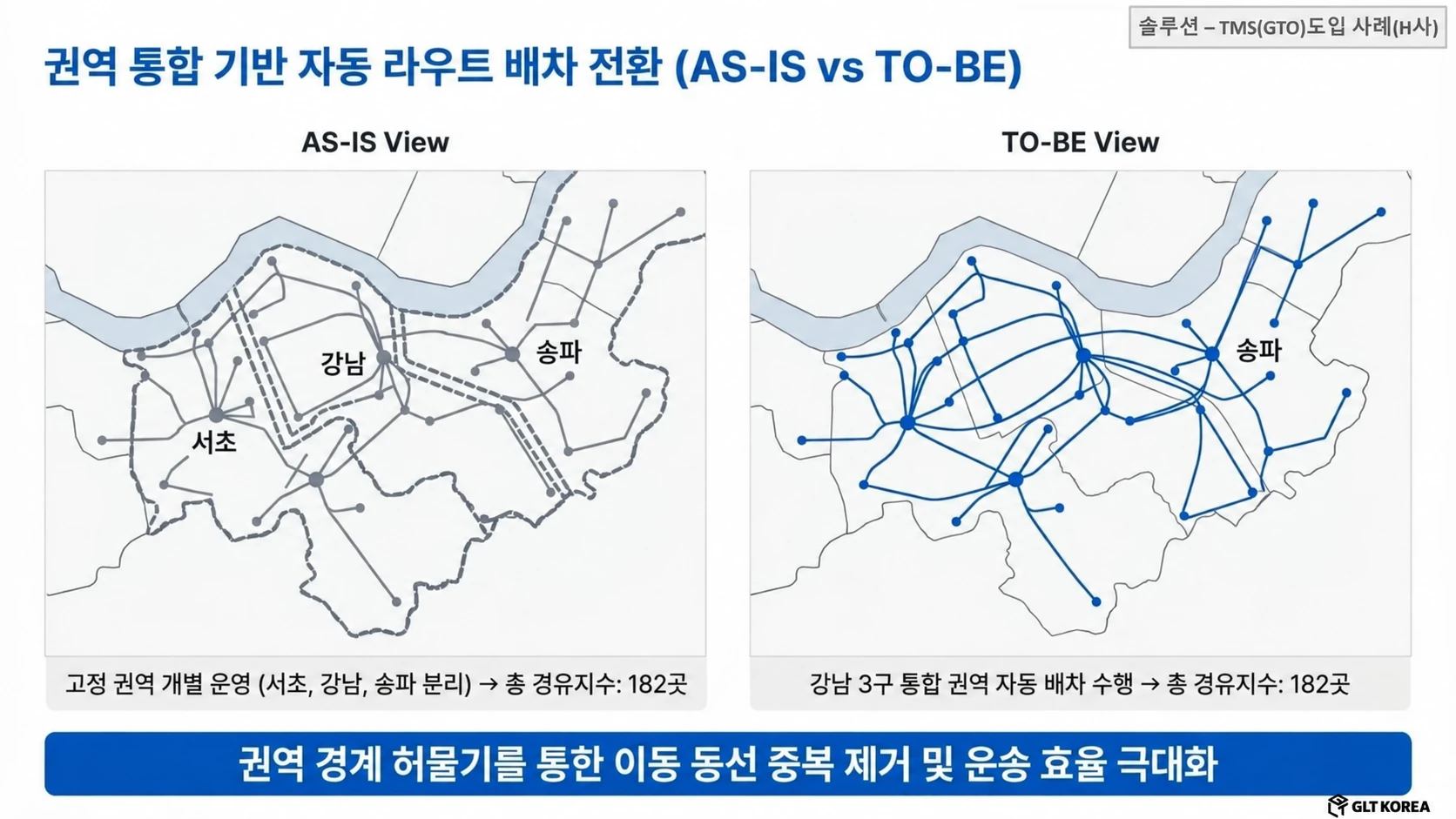
Learn More ↗A case combining fixed pickup territories and updating routes for additional orders. Distance and time are compared using the same stop count, alongside the replanning workflow.
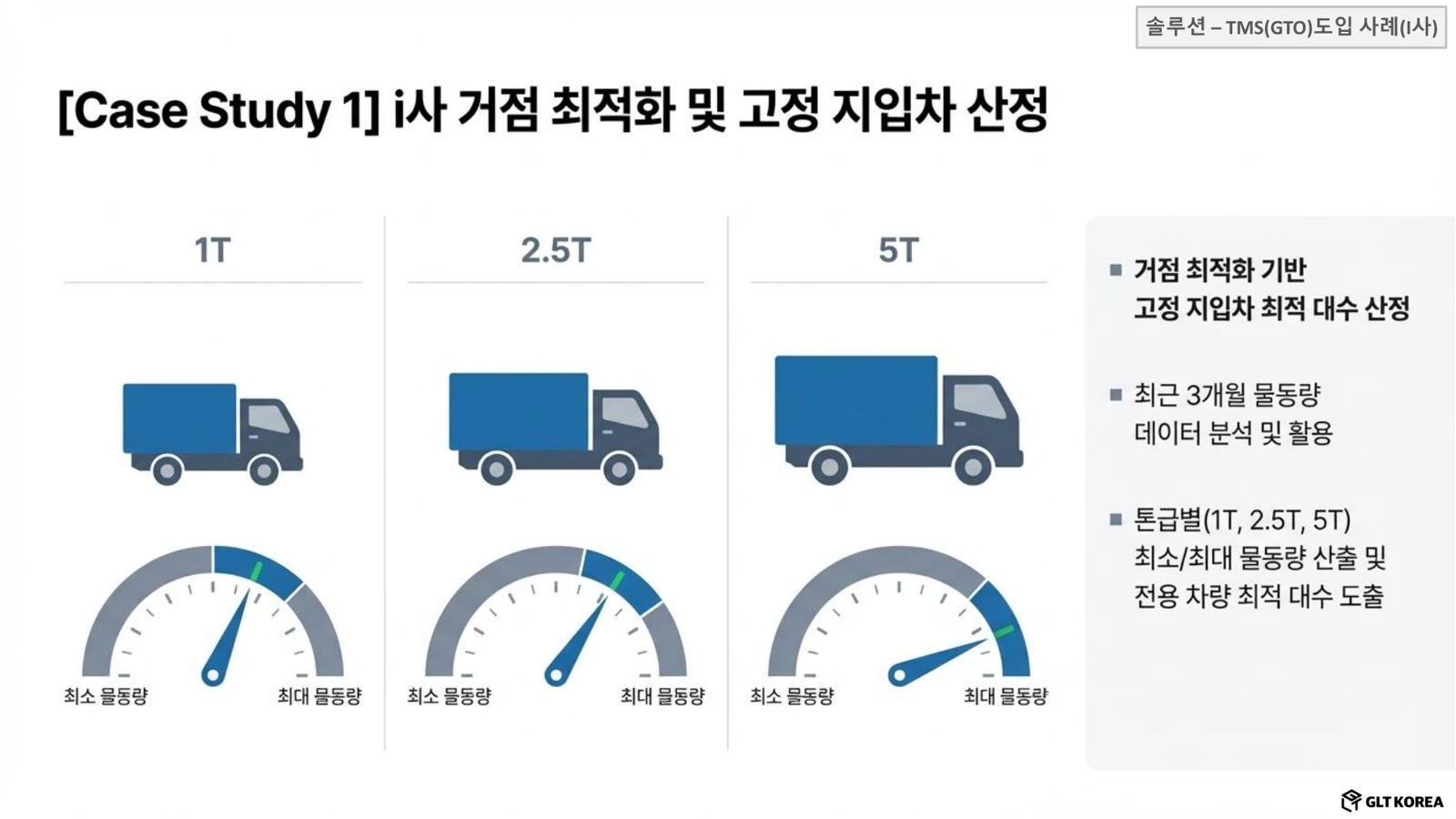
Learn More ↗A fleet planning case comparing daily orders and vehicle costs to evaluate the mix of dedicated and hired vehicles. The source describes the 30-day simulation assumptions and recommended fleet size.
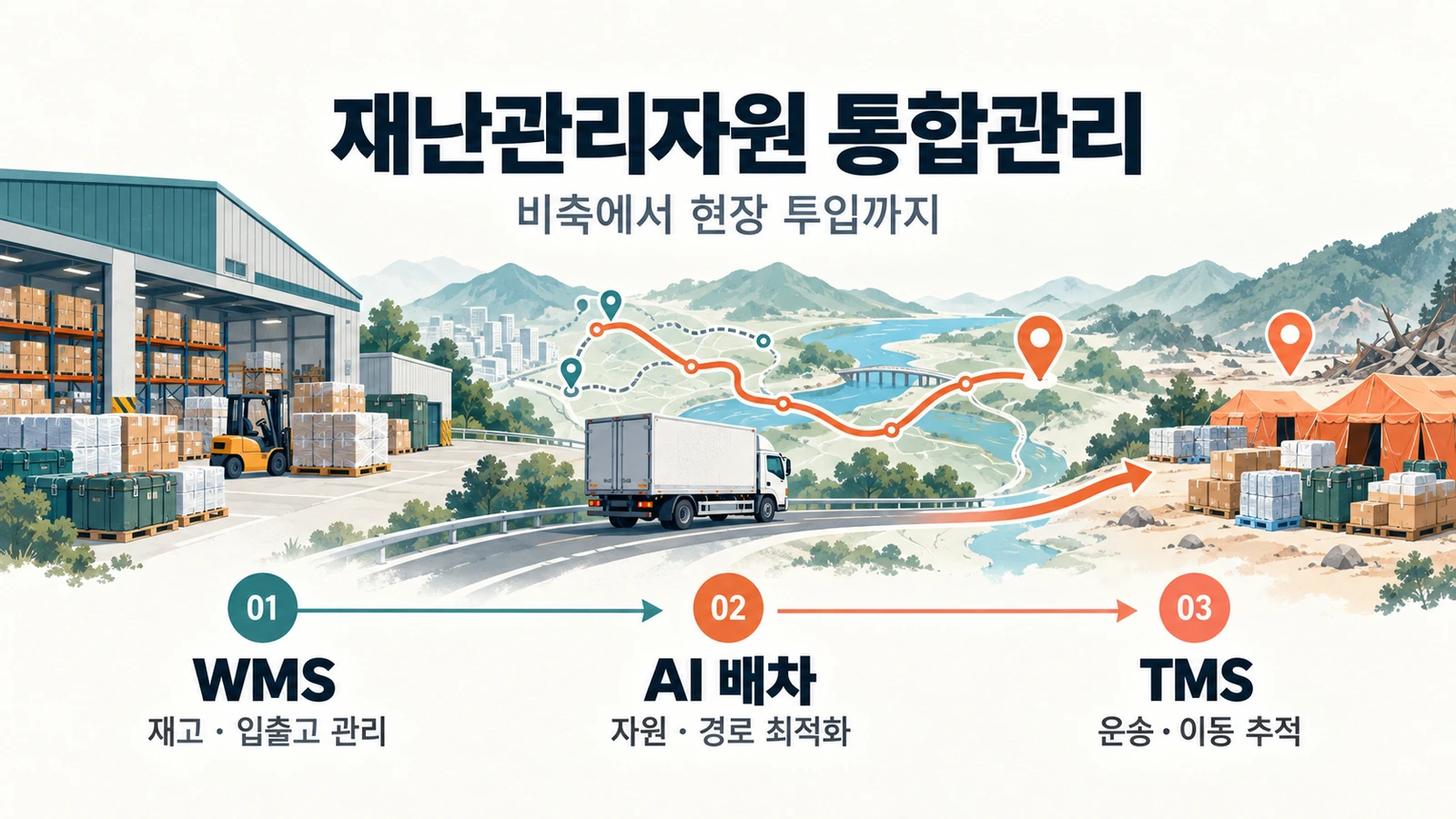
Learn More ↗Explore GLT’s participation in intelligent logistics for the Ministry of the Interior and Safety’s integrated disaster resource management system, including the scope of WMS, TMS and dispatch optimization.
Learn More ↗Five synthetic JSON examples and a reading guide for transport orders, vehicles, facilities, dispatch policies and reference master data.
Learn More ↗A 44-slide PowerPoint covering TMS project experience, optimization functions, transport and network simulation, and screenshots of earlier implementations.
Learn More ↗An 85-page PDF introducing G-TO’s TO, NO, Route and Load Build functions, application architecture and GLT project examples.
Learn More ↗The deliverables and factors that shape schedule and cost at each stage: data review, comparative validation, system integration and operational rollout.
Learn More ↗Based on POL-TMS-020, this guide distinguishes optimization order attributes, vehicle and facility master data, and dispatch policies, with practical data checks.
Learn More ↗A practical guide to input conditions, metric formulas, constraint compliance, execution environments and measured operational results.
Learn More ↗Understand the roles of NO, TO and TMS, and how to prepare order, delivery point, vehicle and transport requirement data before implementing dispatch optimization.
Learn More ↗