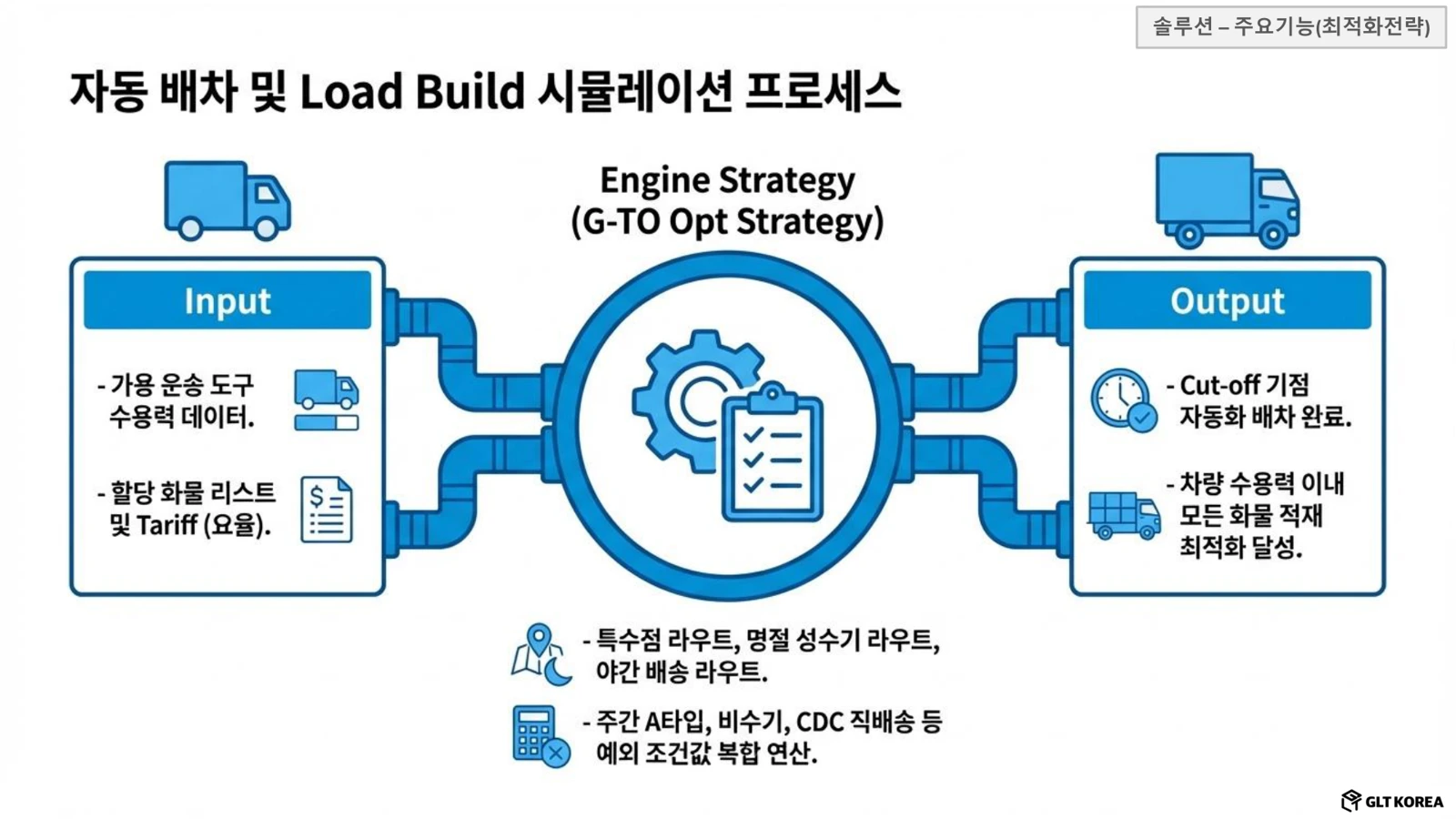
Dispatch engine input does not consist solely of an order list. POL-TMS-020 explains how transport orders (F/O), associated masters, and constraint policies by shipper, region, and transportation pattern are referenced together.
What to prepare for your shipping order
| item | meaning |
|---|---|
| F/O id · Customer code | Transportation order identifier and shipper code |
| pickupWindowStart/End · deliveryWindowStart/End | Possible loading/unloading time window |
| windowType · readyTime | Desired/strict time window classification and shipment preparation time |
| Carrier code · Equipment Type | Designated carrier and required vehicle type |
| Consolidation Allow Y/N | Whether or not combining volumes from different shippers is allowed |
| Priority · businessStops | Standard priority code and waypoint number |
| Amount Info | Total weight, volume, quantity and each UOM (unit) |
| incoterms | Transaction conditions to be referenced in transportation planning and settlement |
Master to associate with the order
- Vehicle specifications and available vehicle pool
- Latitude and longitude of the facility, operating hours, loading and unloading times, vehicle types available for entry
- Non-working days associated with the target time window
- Routes or candidate Hubs required for the selected engine
- Product group combinations and standard codes that cannot be mixed together
Conditions determined by the dispatch policy
Manage engine use and type by shipper, region, and transportation pattern, objective function (distance/freight), upper limit of one-time call order, minimum/maximum stop/distance/loading ratio, maximum operation time, depot return, and time window strength.
HARD time windows are treated as hard constraints regardless of relaxation settings. Priority is managed using standard codes, and units are specified for weight, volume, and quantity. The call upper limit is not a guaranteed performance figure, but an operational setting to be determined considering licenses and available resources.
What this document does not specify
POL-TMS-020 defines the input reference range. The actual field types, DB columns, and overall API request/response schema of order/master follow separate definitions and applied versions. Nor does it mean that all algorithms listed in the policy are built into the same version.
Data and Sources
Source: GLT 「C-30 Process Management Item Specification – TMS」 POL-TMS-020, v1.0, last revision on document 2026-09-17 (Confluence page version 20 reviewed).
Download JSON example for data preparation · Pre-implementation data inspection guide